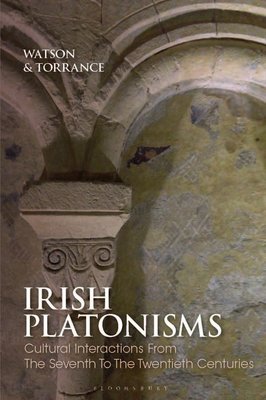
This collection, the first of its kind, traces the cultural history of Platonic influences on Irish authors (and in turn, of the influence of Irish authors on Platonism), exposing the significance of that history for a diverse cross-section of Irish society from some of the earliest surviving texts in the Early Medieval Irish language to authors on both sides of the twentieth-century nationalist/unionist political divide
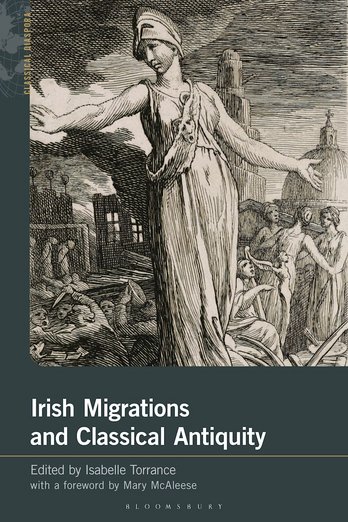
Irish Migrations and Classical Antiquity. Edited by Isabelle Torrance
The CLIC-project volume traces classical reception in contexts ranging from early Irish origin legends and medieval Latin learning to 21st-century cultural politics, including Irish-language translation, diaspora literature and gendered experiences. Participation appears in assertions of Irish civilisation, synchronistic histories, literary cosmopolitanism and transnational exchange. Resistance surfaces in critiques of marginalisation, defence of minority languages and challenges to aesthetic or political canons. This book rethinks how Irish identities travel across borders, languages and centuries by showing how the ancient world underwrites both movement and its meanings.

This CLIC-project volume showcases the expertise in classical learning that flourished in medieval Gaelic Ireland. Included are synchronistic poetry and world chronologies; lesser-known Irish poetry and prose recounting episodes from Graeco-Roman mythography and featuring, for instance, Jason and the Argonauts, Ulysses and Penelope, Agamemnon and Clytemnestra, Daedalus and the Minotaur; linguistic and metaphysical tracts; place-name lore; and medieval historiographies of Alexander the Great, Hercules, and warriors of Irish legend recast as classical heroes. Creating access to this body of texts and revealing the marked influences of classical concepts on the imaginative resources of medieval Ireland fills a conspicuous lacuna in our knowledge of classical reception in European literatures.
Ireland and the North, eds Fionna Barber, Heidi Hansson & Sara Dybris McQuaid, Peter Lang UK, 2019.
The volume is an edited collection of chapters engaging with the relationship between Ireland and the Nordic countries. As a spatial and geographical point of reference for the formation of political and cultural identities in Ireland, the idea of ‘the North’ encourages the identification of overlooked connections between Ireland and the Nordic countries, which, like Ireland, are also small nation states on the periphery of Europe. Importantly, the book employs a double conceptualisation of ‘the North’ to include Northern Ireland. Chapters are drawn from a wide-ranging field of study that includes art history, literary history and theory, archaeology, antiquarianism, and media studies in addition to political analysis. With three sections on Material Culture, Political Culture, and Print Culture, the book moves beyond the predominant literary paradigm in Irish Studies to make a significant contribution to expanding and developing the field.
This special issue examines politics and narratives in Ireland's Decade of Commemorations. It uses the term commemorations in order to include events and engagements that do not officially form part of the Decade of Centenaries but, crucially, take place within this context and become part of its critical mass.
This themed CLIC-project volume provides the first dedicated and comprehensive study of Graeco-Roman influences across Irish visual and material culture from the Middle Ages to today. It features new research that considers an expansive range of material to advance our understanding of the complex interconnections between classical antiquity and Irish visual aesthetics.
A CLIC-project publication.
A CLIC-project publication.
A CLIC-project publication.
A CLIC-project publication.
A CLIC-project publication.
